
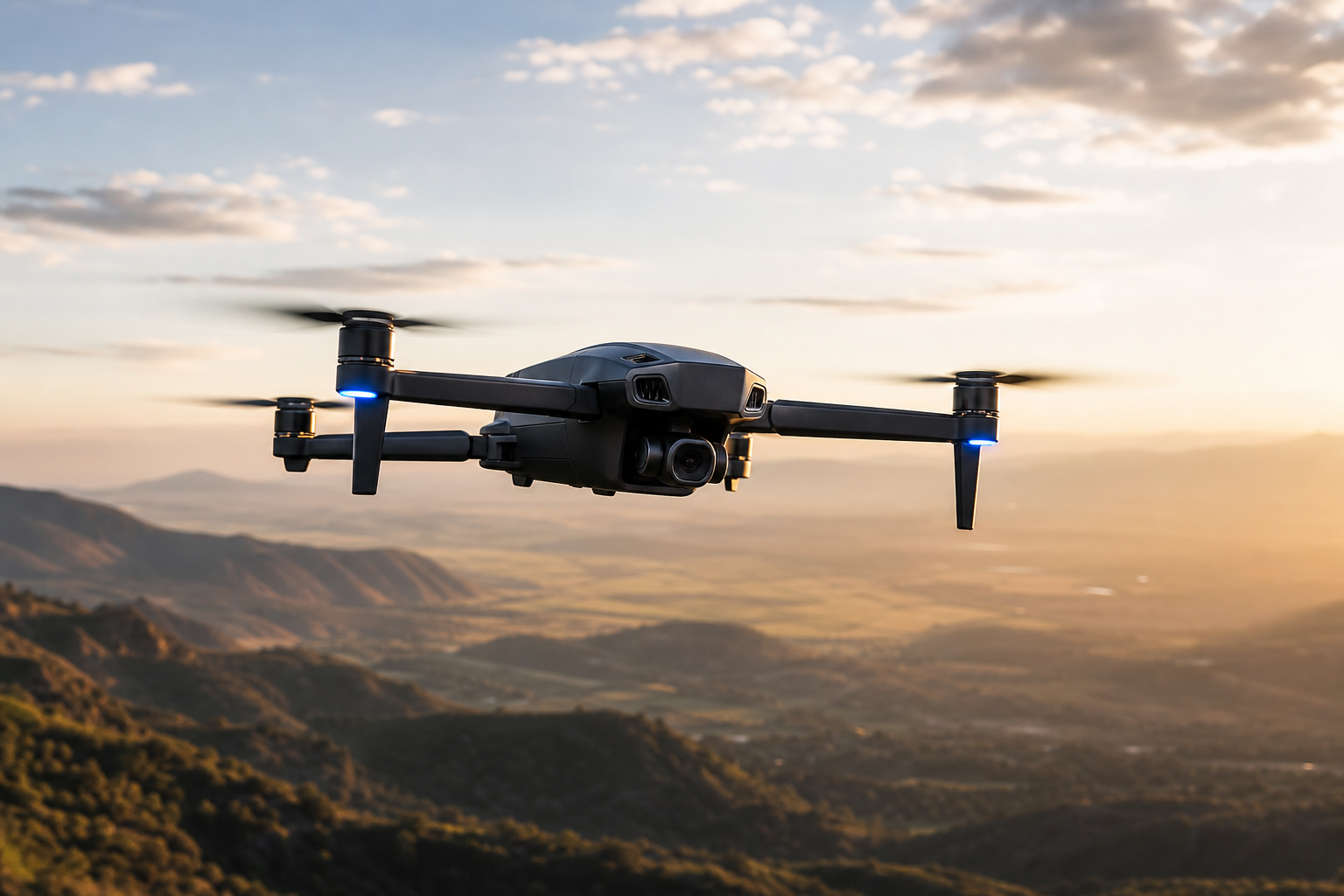
Drones have gone from military tech to everyday hobby — and the market is packed with options at every price point. Whether you’re a first-time flyer or ready to upgrade, knowing what to look for makes all the difference. Here’s everything you need before you buy.
1. Decide What You’ll Use It For
Your use case shapes every other decision. Are you shooting aerial photography for real estate? Racing through obstacle courses? Flying casually at the park? Drones are purpose-built, so matching the right model to your goal matters more than chasing specs.
- Photography & videography: Prioritize camera quality, gimbal stabilization, and flight time.
- Beginners & casual flying: Look for GPS-assisted hover, obstacle avoidance, and return-to-home.
- Racing: Focus on speed, manual mode, and FPV (first-person view) capability.
- Travel: Compact, foldable designs like mini drones are easier to carry.
2. Camera Quality: Megapixels Aren’t Everything
For aerial footage that actually looks good, camera specs go beyond megapixels. Look for:
- Resolution: 4K is the current standard for quality video; 1080p is fine for casual sharing.
- Frame rate: 30fps for normal footage, 60fps+ for smooth slow-motion.
- Gimbal stabilization: A 3-axis mechanical gimbal eliminates shake — far better than digital stabilization alone.
- Sensor size: Larger sensors capture better detail in low-light conditions.
3. Flight Time & Battery Life
Most consumer drones offer 20–40 minutes of flight per battery. That sounds like enough, but real-world flying (wind, cold weather, aggressive maneuvers) often cuts that short. Smart move: buy a spare battery or two — it doubles your time in the air. Look for drones that charge via USB-C for convenience.
4. Range and Signal Strength
Control range determines how far you can fly before losing signal. Entry-level drones may top out at 100–300 meters; higher-end models reach several kilometers. If you’re shooting wide open landscapes or large properties, range matters. Check whether the controller uses Wi-Fi, a dedicated radio frequency (like 2.4GHz or 5.8GHz), or OcuSync-style encrypted transmission — the latter is more reliable and interference-resistant.
5. Safety & Smart Features
Modern drones pack intelligent features that prevent crashes and make flying much less stressful:
- GPS Hold: Keeps the drone locked in place when you release the controls.
- Return to Home (RTH): Automatically flies back and lands if signal is lost or battery is low.
- Obstacle avoidance: Sensors that detect and avoid trees, buildings, and other objects.
- Geofencing: Prevents flying in restricted airspace near airports.
6. Know the Rules Before You Fly
In the United States, the FAA requires recreational drone pilots to register any drone weighing over 0.55 lbs (250g) and follow local airspace rules. Flying near airports, national parks, or populated events requires special permission. Apps like B4UFLY and AirMap show real-time airspace restrictions. Know the rules — fly responsibly.
7. Budget Breakdown
Drones cover a wide price spectrum:
- Under $100: Mini drones great for indoor fun or beginners learning the basics. Limited range and camera.
- $100–$300: Strong value — GPS, decent camera, 20+ min flight time. Great starter territory.
- $300–$600: Serious hobbyist range — 4K cameras, longer range, more intelligent flight modes.
- $600+: Professional-grade cameras, extended flight time, obstacle avoidance on all sides.
Ready to Find Your Drone?
At Velt Supply, we carry a wide selection of drones for every skill level and budget — all brand new and shipped free across the United States. Whether you’re buying your first or looking for a step up, explore our full drone collection and find the right fit for how you fly.
Leave a Reply